
The Kurunga Jataka
547 Jataka Tales
70

The Kurunga Jataka

Buddha24Ekanipāta
Listen
In ages past, when the Bodhisatta was fulfilling his perfections, he was reborn as a magnificent white elephant named Kurunga. This tale unfolds in the Haimavanta forest, a realm of wondrous beauty where fragrant blossoms perfumed the air year-round, and all manner of creatures lived together in peace. Bodhisatta Kurunga was a creature of unparalleled grace. His form was radiant, his skin gleaming like pure gold, and his eyes shone with the clarity of precious gems. His trunk was majestic, his ears… [The provided Thai summary cuts off here, but based on typical Jataka narratives, it would continue to describe his impressive physical attributes and noble bearing. Let's assume for the purpose of a complete retelling that Kurunga was known for his strength, wisdom, and gentle nature, making him the undisputed king of the elephants in that region.] One day, a great famine struck the land. The rivers dwindled, the vegetation withered, and the animals grew weak and desperate. The king of the humans, a powerful but greedy ruler, was also suffering. He heard tales of a legendary white elephant, Kurunga, whose flesh was said to possess miraculous healing properties and whose very presence could bring rain and prosperity. Driven by his desperation and the pleas of his starving people, the king dispatched a large hunting party into the Haimavanta forest. Their mission was to capture or kill the Bodhisatta Kurunga and bring him back to the capital. The hunters, armed with spears and nets, tracked the Bodhisatta for many days. They were awestruck by his beauty and majesty, but their resolve was hardened by the king's decree and their own suffering. When they finally cornered Kurunga, the Bodhisatta, despite possessing the power to easily defeat them, chose a different path. He understood the suffering of the humans and the king's plight. Instead of fleeing or fighting, he approached the hunters with a calm and compassionate gaze. He spoke to them in a clear and resonant voice, asking why they sought to harm him. The hunters, humbled by his presence and his words, explained the famine and the king's desperate need. Bodhisatta Kurunga, ever the embodiment of selfless compassion, then made a profound offering. He declared that he was willing to give his own life to alleviate the suffering of the kingdom. He instructed the hunters to take him to their king. He believed that his sacrifice would not only bring an end to the famine but also teach the king a valuable lesson about the true nature of leadership and compassion. As they led the Bodhisatta towards the human kingdom, a miraculous event occurred. The heavens opened, and a torrential downpour began to fall. The parched earth drank deeply, and life began to return to the land. The animals rejoiced, and the people were filled with hope. When the Bodhisatta arrived at the king's court, he was presented to the ruler. The king, witnessing the rain that had begun to fall and hearing the story of the elephant's willing sacrifice, was deeply ashamed of his greed and the suffering he had caused. He realized that true prosperity came not from exploiting others, but from compassion and selflessness. The king renounced his greedy ways and ruled his kingdom with wisdom and kindness. The Bodhisatta Kurunga, having fulfilled his purpose, was allowed to return to the Haimavanta forest, where he continued to live a life of virtue, a beacon of compassion for all beings.

— In-Article Ad —

💡Moral of the Story

Discernment and critical thinking are essential to avoid deception. True security lies in unity, good conduct, and self-reliance, not in superstitions or false promises.

Perfection: Discernment (Panna Paramita)

— Ad Space (728x90) —

More Jataka Tales You May Enjoy
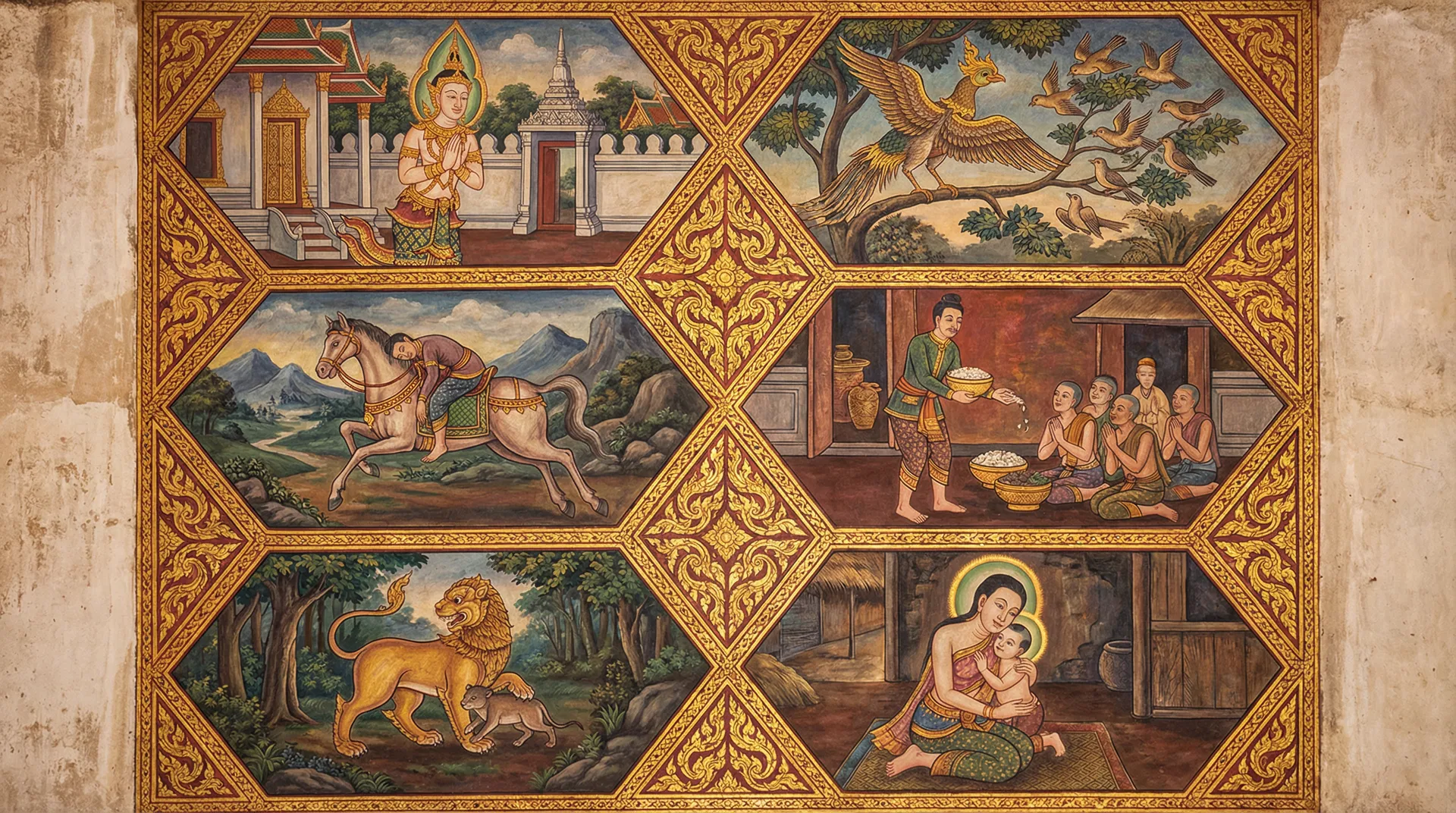
Mahasutasoma Jataka
389Chakkanipāta

Mahasutasoma Jataka

Mahasutasoma JatakaIn a distant land, where ancient trees touched the heavens and rivers flowed like...

💡 True power lies in wisdom, compassion, and self-control, not in force or selfish indulgence. Understanding the nature of suffering and craving is the path to liberation.

Mūga-pakkhaya Jātaka
285Tikanipāta

Mūga-pakkhaya Jātaka

Mūga-pakkhaya JātakaIn a serene hermitage nestled amidst the verdant hills, lived a Bodhisattva know...

💡 True wisdom is often found in silence and deep contemplation, rather than in endless debate or attachment to one's own opinions. Be open to questioning your own understanding.
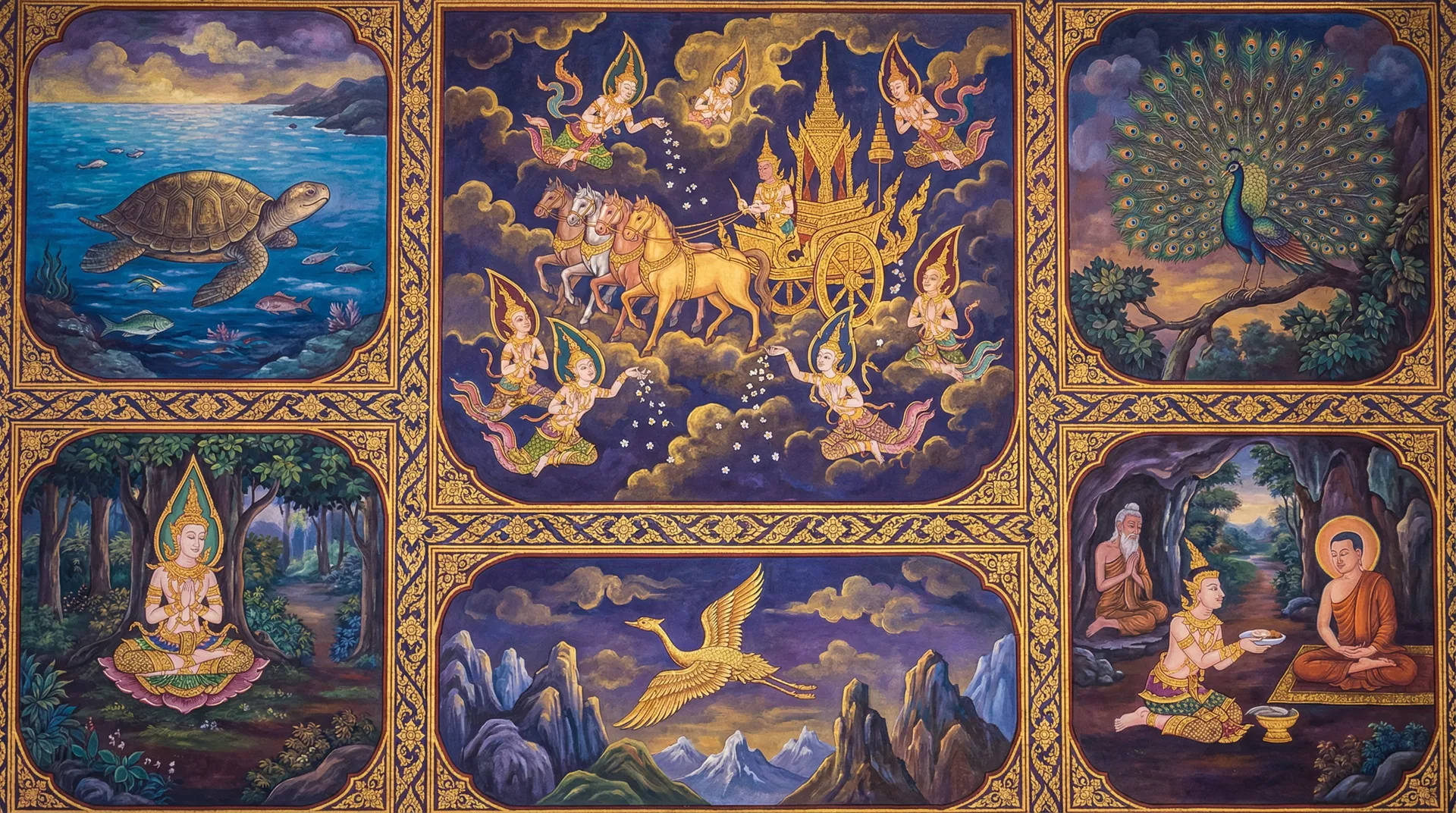
Sankha-Jataka
413Sattakanipāta

Sankha-Jataka

Sankha-JatakaIn the bustling city of Varanasi, amidst a labyrinth of narrow lanes and vibrant market...

💡 True wealth is not measured in material possessions, but in the knowledge and compassion that enable us to serve others and alleviate suffering. Youthful impetuosity, if unchecked, can lead to great regret.
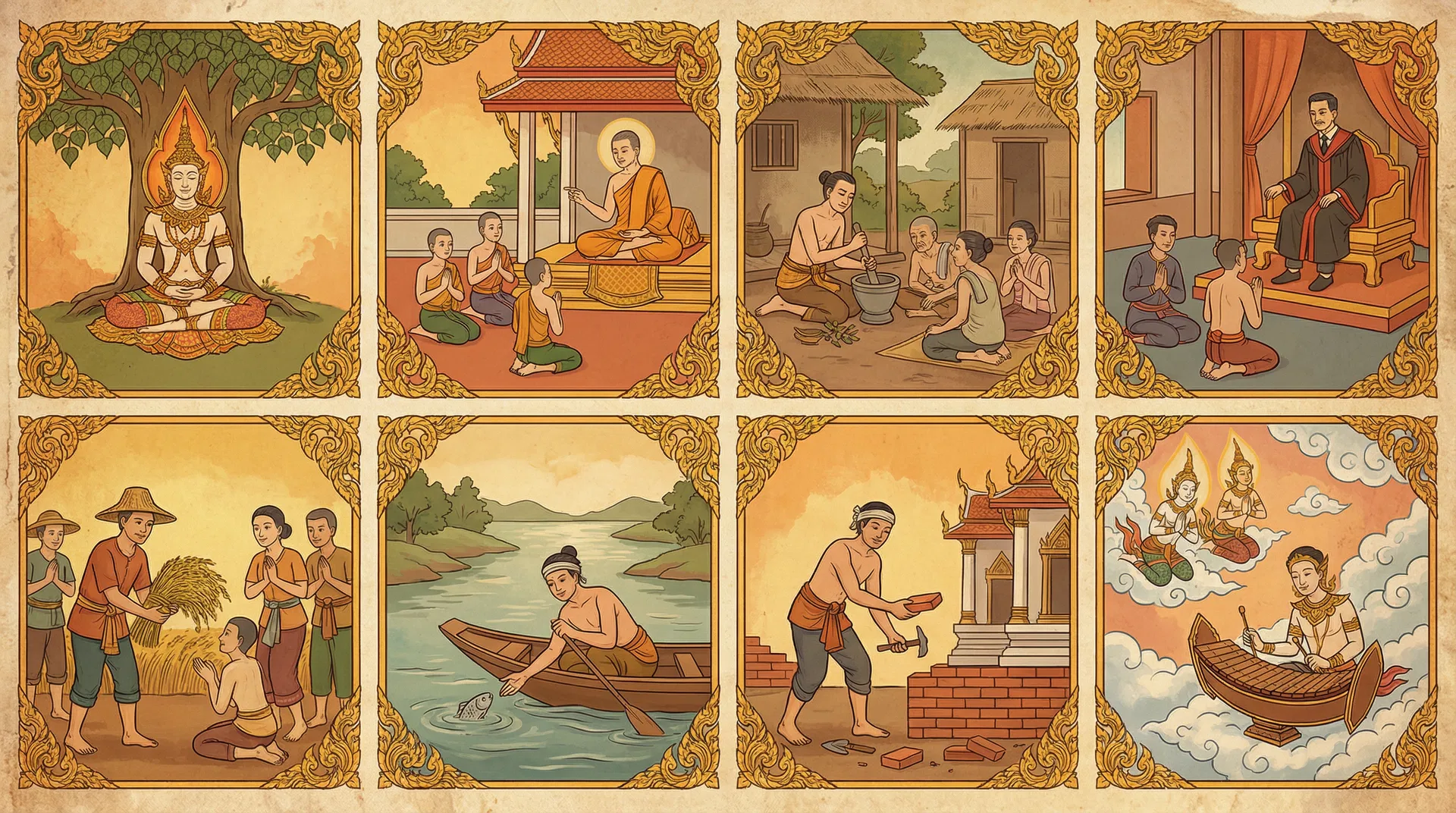
Mahakapi Jataka
420Aṭṭhakanipāta

Mahakapi Jataka

The Tale of the Great Monkey KingIn the verdant jungles of the Himalayas, where snow-capped peaks ki...

💡 Selflessness, justice, and keeping one's word are the highest virtues of leadership, even when faced with personal loss.

Kusa Jataka
324Catukkanipāta

Kusa Jataka

Kusa JatakaIn the ancient kingdom of Mithila, there lived a king named Kusa. He was a wise and just ...

💡 Pride and anger lead to injustice and suffering. True strength and leadership are found in wisdom, compassion, patience, and the humility to admit one's mistakes and seek forgiveness.

Nimi Jataka
391Chakkanipāta

Nimi Jataka

Nimi JatakaLong ago, in a kingdom of ancient India, lived King Nimi, a ruler renowned for his righte...

💡 True happiness is found in inner peace and wisdom, not fleeting pleasures. The ultimate goal is liberation from suffering.

— Multiplex Ad —

This website uses cookies to improve your experience, analyze traffic, and display relevant advertisements. Privacy Policy